Commercial Waste Removal in Mitcham
Commercial waste removal in Mitcham should be straightforward, well organised and suited to the day-to-day needs of local businesses. We handle the collection and disposal of office waste, shop refuse, mixed commercial rubbish and bulky items that need to leave premises without slowing work down. The aim is to keep premises clear, reduce clutter around storage points and provide a practical service that fits routine operations as well as one-off clearances.
For many customers, the most useful approach is a clear plan for what needs taking away, when it can be lifted and how it should be separated. Our service supports business waste removal across a range of commercial settings, with attention to access, loading space and the type of waste involved. If you are comparing options, start with the kind of material, the amount and the site layout so the next step is easier to organise.
When you are ready to move ahead, you can ask for a quotation in plain terms and outline the waste you need removed. A simple request is often enough to begin, especially if the items are already grouped by area or type. If you want to discuss the job in more detail, keep the description practical and focused on the waste itself.
Business waste removal for regular and one-off clearances
Business waste removal usually covers a wider range of materials than domestic work, because workplaces generate packaging, filing, broken fixtures, redundant stock and general refuse in different combinations. Our service can support routine clearances from offices, shops, workshops and other commercial premises where waste builds up gradually or appears all at once. The key is to deal with it in a way that does not interrupt the normal running of the site.
If the waste is mainly general refuse, the process may be straightforward. If it includes mixed items, awkward furniture or heavier contents from storage areas, the collection plan needs a little more thought. In practical terms, the most useful details are the item type, approximate quantity and any access limitations. That helps us match the job to the right removal approach and keep the service efficient for the premises involved.
Common commercial items we can take away
The work often includes items that are no longer needed but still take up valuable space. Typical examples include broken office chairs, worn shelving, packaging waste, redundant stock, unwanted fixtures and bagged rubbish from storerooms. In some cases, businesses also need help removing mixed contents from back rooms, basements or cupboards that have become difficult to manage in-house. A clean removal plan can make these areas usable again.
Office clearances and workplace furniture
Office clearances are often about more than simply moving furniture. They may involve desks, chairs, filing units, screens, shelving and assorted waste produced by reorganising a workspace or emptying a room. We can support these jobs with a measured approach that keeps usable space accessible while the unwanted material is removed. In many offices, the main concern is keeping disruption low and ensuring the items are taken in an orderly way.
If you are clearing a suite, meeting room or shared workspace, the most helpful preparation is to identify what stays and what goes before the collection takes place. That keeps the removal focused and avoids unnecessary handling on the day. It also makes it easier to separate office furniture from general rubbish or confidential material. If confidential shredding is part of the job, it should be identified clearly at the outset so it can be handled appropriately.
Some business customers need more than one type of disposal in the same visit. For example, an office might have furniture to remove, paper waste to destroy securely and general rubbish to clear from storage. In that situation, the scope is best described item by item. That makes it easier to plan the collection and ensures each material stream is dealt with in the right way rather than bundled together without thought.
Specialist disposal for bulky or awkward items
Bulky waste needs a service that can handle larger items without forcing the premises to work around them for long. Furniture disposal, for instance, often includes sofas, shelving, cabinets and mixed household-style items from commercial spaces such as reception rooms, waiting areas, staff rooms or managed properties. Our work in this area helps remove the items that are too large for ordinary waste streams and need a separate collection.
Appliances can create a different set of requirements. Fridges and similar units may need careful movement through corridors, stairwells or shared access points, and their removal is usually best planned in advance rather than left until the last minute. Fridge and appliance removal is most useful when the item is clearly described, especially if there are size constraints or multiple appliances to be taken together. The more accurate the description, the easier it is to organise.
Other awkward items may include large mattresses, old sofas or damaged furniture that cannot simply be set out with everyday rubbish. Mattress and sofa disposal suits this kind of work where the items are bulky, hard to store and ready to leave the premises in one visit. If there are several types of heavy waste, listing them together helps the collection stay efficient without unnecessary handling.
Clearances for storage spaces and access-limited areas

Storage rooms, loft spaces, garages and similar areas often collect waste that is ignored until access becomes difficult. We can support clearances from these spaces when the goal is to remove redundant items, old equipment or mixed rubbish that has built up out of sight. The practical challenge is often not the waste itself but getting it out safely and sensibly from a confined or awkward location.
Loft and garage clearances usually benefit from a careful sort before removal begins. If the contents include a mix of reusable items, broken goods and loose waste, it is easier to work through them in categories rather than as one unsorted mass. Loft clearance and garage clearance are both useful where the access route is limited and the items may have been stored for a long time. That makes the description of the contents especially important.
When the waste is spread across more than one part of the property, it helps to note whether the collection is from a single room, a series of storage areas or a whole floor. In commercial premises, these jobs are often linked to reorganising stock, reclaiming floor space or preparing for repairs. The waste removal service can then be shaped around the actual layout rather than treated as a generic collection.
House, flat and home clearances for mixed premises
Some commercial waste jobs involve residential-style properties that are managed, rented or being prepared for change of use. In those cases, the waste may look more like household contents than standard office rubbish, even though the work is still commercial in nature. We can help with house clearance, flat clearance and home clearance where the task is to remove mixed items from rooms, cupboards and storage spaces in a controlled way.
These clearances are often most effective when the customer has already separated obvious valuables, records and anything that should remain on site. After that, the remaining items can be grouped by room or type to make the collection easier to manage. House clearance is relevant where the property is more traditional in layout, while flat clearance is often more practical in buildings with shared access, stairs or compact rooms.
For larger or more mixed domestic-style clearances, home clearance can cover a broader range of contents and help when rooms contain furniture, bagged waste and smaller loose items together. The important point is to describe the condition of the space clearly, so the removal can be arranged without confusion about what is included and what should stay behind.
Site tidy-ups, garden waste and building-related rubbish
Commercial properties often gather waste that sits outside the normal office or storage categories. This can include garden cuttings from managed grounds, broken materials from maintenance work or leftover rubbish from refurbishment and repair. We can support these jobs when the waste is clearly identified and the disposal needs are practical rather than specialised. The main objective is to restore order and remove the material without delay.
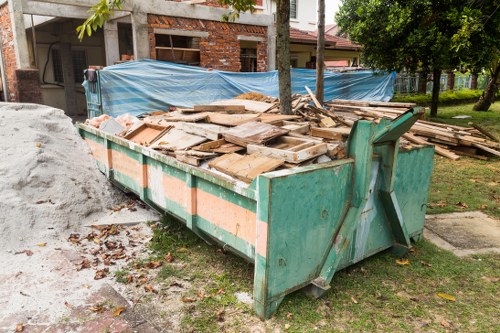
Garden waste collection is useful for businesses with planted areas, communal outdoor spaces or maintenance tasks that produce cuttings and organic debris. Garden clearance can help when branches, grass, prunings or mixed green waste need to be taken away as part of a wider clean-up. For building-related waste, builders waste clearance is relevant where the material includes offcuts, broken fittings, packaging or rubble-like debris from work on the premises.
These jobs are usually easier to manage when the waste has already been gathered into one accessible area. That does not need to be elaborate: a single pile, a few grouped bags or a clearly marked corner can be enough. If there are heavier materials mixed with lighter ones, mention that in the enquiry so the removal can be planned sensibly.
Sorting, disposal and responsible handling
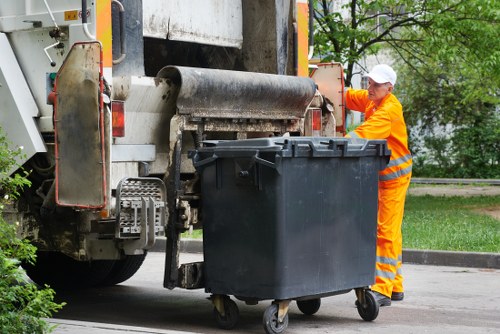
Good commercial waste removal is not just about lifting items away. It is also about handling different materials in a responsible way, especially where rubbish includes metal, wood, mixed furniture, appliances or segregated office material. We work with disposal in mind, so the collection is more than a simple load-and-go exercise. Where suitable, items can be directed into the appropriate waste stream instead of being treated as one undifferentiated pile.
Recycling and sustainability is relevant where a customer wants to understand how waste is separated and why certain items need to be kept apart. That can matter for office clearances, furniture disposal and appliance removal, because mixed loads often contain components that should not all be handled the same way. If the material includes items that may be reusable, recyclable or for disposal, it helps to flag that from the start.
Some waste types require more careful judgment than others. If an item is classed as hazardous or may be unsafe to move without the right handling, it should be identified clearly rather than included casually with general rubbish. Hazardous waste disposal is only suitable where the material genuinely falls into that category, so accuracy matters. Keeping the description honest helps the collection be planned properly and avoids unnecessary complications.
About Mitcham
Mitcham is a district in the London Borough of Merton in southwest London, known historically for its long association with the River Wandle and with market gardening. The parish and settlement grew around the open land and watercourses that supported cultivation, and traces of that past remain visible in the borough’s street pattern, green spaces and heritage buildings. The area includes a mix of residential streets, local shopping parades and older civic landmarks, creating a character that feels layered rather than uniform. One of its best-known historic places is Mitcham Common, an extensive open space that preserves a sense of former common land and provides a broad green corridor through the area. Close by, Morden Hall Park and the wider Wandle Valley reinforce the relationship between the townscape and the river environment. St Peter and St Paul’s Church is another long-standing landmark, standing as part of the older core of the settlement. Mitcham today sits within a wider urban area, yet it still retains a recognisable centre, a set of historic anchors and a connection to the green and watery landscape that shaped its earlier development.
Commercial waste services shaped around the job
Different businesses need different levels of support, and the waste service should reflect that rather than forcing every job into the same pattern. A shop might need packaging and display waste removed after a refit, while an office might need old furniture, files and general rubbish taken away in a tidy sequence. A managed property may need several rooms cleared in stages. The common thread is a straightforward collection that respects the layout and the materials involved.
Useful planning usually comes down to a few basic points: what the waste is, where it is located and how it can be accessed. If stairways, narrow corridors or shared entrances are part of the job, that should be included in the description. If there are several waste types, a brief list is better than a broad summary. This keeps the quotation process clear and helps avoid confusion later. If you would like to talk through the job, a plain explanation is enough.
For a simple next step, gather the main item groups and decide which spaces need emptying first. Then request a quotation when you are ready. If you want to move ahead with a collection, use the contact option on the site or send the details through in one concise message. Clear information leads to a clearer quote, and it makes it easier to set the right plan for the removal.
Office clearances, confidential shredding and practical booking

Some commercial clearances involve more than furniture and general waste. Paper records, archived files and documents awaiting destruction may need to be separated from the rest of the load. In those cases, confidentiality matters as much as convenience. Confidential shredding is relevant where paperwork should be dealt with securely rather than mixed into ordinary waste, and it is best mentioned early if the job includes records or sensitive material.
Pricing for commercial waste removal is usually influenced by the type of material, the volume to be taken away and the access required to remove it. A simple ground-floor collection is different from a more involved clearance involving several rooms or a difficult route to the vehicle. If you are comparing options, the clearest way to prepare is to separate the waste into obvious groups and note any special handling requirements. For details about how quotes are approached, pricing and quotes gives a sensible place to look before making a request.
When you are ready to arrange a collection, keep the request focused on the waste, the location on site and the timing that suits the property. You can also use the site’s booking options if they suit your needs. The final step is simple: contact us for a quotation and give a brief description of the commercial waste that needs removing.